Why Self-Ordering Kiosks Are Essential for Modern QSRs
Posted on 10 December 2025 by Maitri Bhavsar
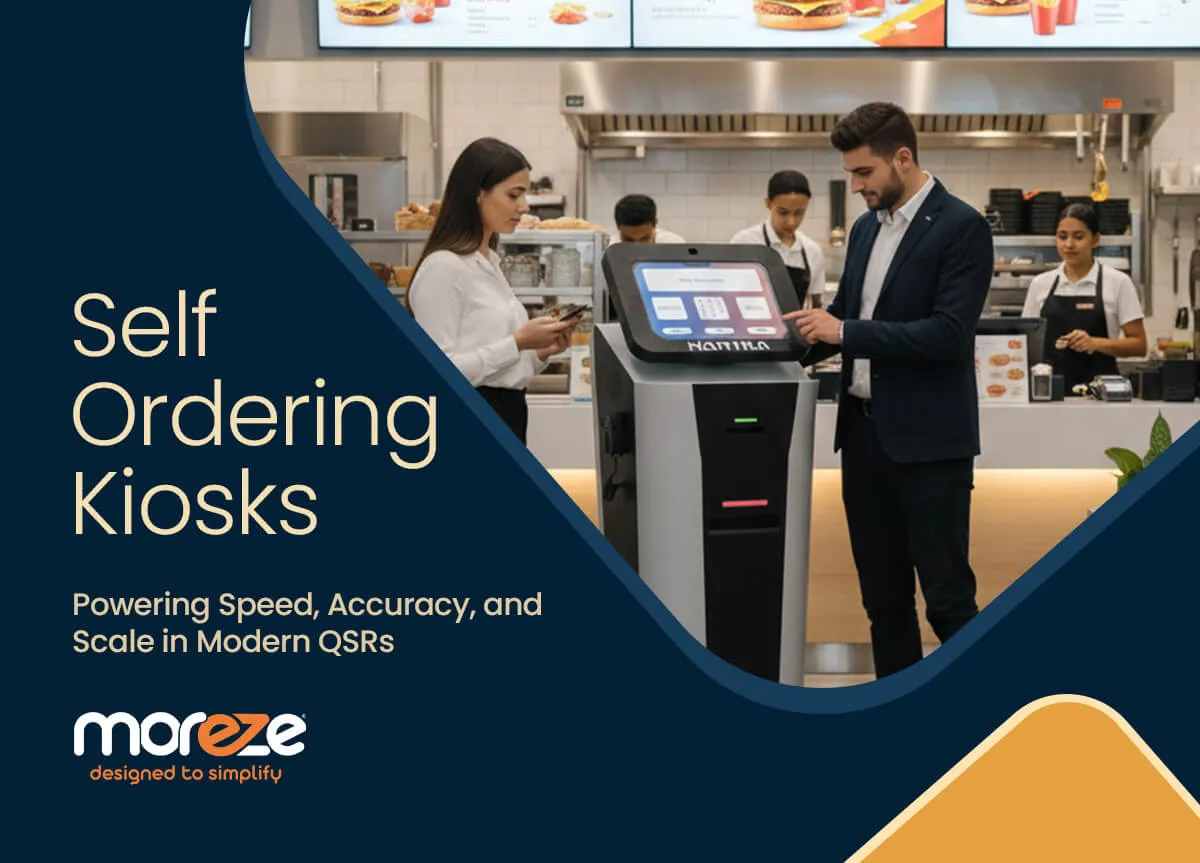
Quick Service Restaurants operate on a simple promise: serve more customers, faster, without compromising consistency. For years, this model worked because demand, staffing, and customer expectations were relatively predictable.
That balance no longer exists.
Restaurant sales are projected to reach $1.5 trillion in 2025, driven by strong consumer demand and frequent dining occasions. Yet, higher demand has not been translated into easier operations. Instead, QSRs are being asked to do more with tighter margins, fewer staff, and customers who expect speed without friction.
This is where self-ordering kiosks move beyond convenience and become operational infrastructure.
Across global QSR chains and regional fast-food outlets alike, restaurant self-ordering kiosks are now embedded into daily operations. Not to replace staff, but to protect speed, accuracy, and profitability under modern pressure.
The Reality Behind Modern QSR Operations
Behind the counter, pressure is building. According to industry data, 61% of restaurant operators reported a decline in customer traffic between 2023 and 2024, despite overall demand remaining strong.
The issue is not lack of interest. It is friction. At the same time:
Food and labor costs are both more than 30% higher than in 2019
96% of operators cite labor costs as a significant challenge
95% cite food costs and inflation as ongoing pressure points
QSRs are caught between growing demand and shrinking operational flexibility. These pressures surface clearly in a few recurring challenges.
Core Challenge's Facing Modern QSRs
Modern QSRs are under pressure from multiple directions at once.
Footfall continues to rise, especially during fixed peak windows. At the same time, staff availability is shrinking, training cycles are getting shorter, and customer patience is lower than ever.
Traditional counter-based ordering was never designed for this level of volume and complexity.
Challenge 1: Peak-Hour Congestion and Long Queues
Customer demand is not evenly distributed. Lunch and dinner peaks have become more intense rather than spread out.
Research shows that more than 7 in 10 limited-service operators say building on-premises traffic is critical for success in 2025. Yet counter-only ordering struggles to handle concentrated footfall.
Customers notice this immediately. Long queues remain one of the fastest ways to lose potential orders. Industry surveys consistently show that customers abandon QSR lines once wait times cross a few minutes.
How Self-Ordering Kiosks Solve This
QSR self-ordering systems enable parallel ordering. Instead of one cashier serving one customer at a time, multiple customers place orders simultaneously.
This directly helps:
Reduce visible queues.
Increase orders processed per hour
Capture demand that would otherwise walk away
For high-traffic locations, digital ordering kiosks are not about speed alone. They protect revenue during peak demand.
Challenge 2: Order Errors and Costly Remarks
As the volume rises, accuracy falls.
Counter-based ordering depends heavily on human memory, verbal communication, and speed. During rush hours, mistakes become inevitable.
Order errors lead to:
Remakes and food waste
Slower kitchen flow
Dissatisfied customers who are less likely to return
How Kiosks Improve Accuracy by Design
With touch screen ordering kiosks, customers build their own orders visually. Modifiers, add-ons, and exclusions are selected directly and confirmed before payment.
This improves order accuracy in QSR without adding staff or slowing service. Kitchens receive clean, structured orders that are easier to execute, even at scale.
Challenge 3: Rising Labor Costs and High Turnover
Labor remains one of the largest and least flexible expenses in QSR operations.
The 2025 industry outlook shows:
77% of operators struggle with recruiting and retaining employees
Staffing levels, especially in service roles, remain below pre-pandemic norms
Training new front-of-house staff repeatedly is costly and time-consuming, particularly when turnover remains high.
How Kiosks Support Smarter Labor Use
Self-ordering kiosks for QSR reduce dependency on order-taking roles without removing human interaction.
Staff can focus on:
Food preparation
Order handoff
Customer assistance
This supports labor cost optimization in QSR while improving service consistency and reducing burnout during peak hours.
Challenge 4: Missed Revenue from Inconsistent Upselling
Upselling works, but only when it happens.
Industry data shows that 45% of quick service operators found value and combo meals effective in driving revenue, yet success varies widely by staff execution.
During rush periods, upselling is often skipped entirely.
How Kiosk Standardize Upselling
Restaurant kiosk solutions integrate upsell prompts directly into the ordering journey. Add-ons, combos, and upgrades appear visually and consistently.
This has helped many QSRs increase the average order value by 10 to 20%, without extending order time or increasing staff workload.
Challenge 5: Changing Customer Expectations Around Experience
Today s customers value experience as much as price.
According to the report: 73% of limited-service customers rank cleanliness and wait time as top experience factors.
Nearly half of QSR customers say experience matters more than price.
Customers want control, clarity, and speed.
How Self-Service Improves the Experience
Self-service kiosks for restaurants let customers browse menus, customize orders, and pay at their own pace. Multilingual interfaces and visual menus further improve accessibility.
This leads to improved customer satisfaction in QSR, especially among Gen Z and millennial customers who are already comfortable with self-service technology.
Challenge 6: Limited Visibility into Ordering Behavior
Counter ordering provides limited insight into customer preferences, abandoned orders, or promotion of performance.
How Kiosks Enable Data-Driven Decisions
POS integrated self-ordering kiosks capture detailed insights such as:
Popular modifiers
Time-based demand patterns
Promotion performance
With cloud-based kiosk management, operators can refine menus and pricing using real usage data, supporting better restaurant workflow automation.
Why Self-Ordering Kiosks Are No Longer Optional
The pressures shaping modern QSRs are systemic, not seasonal.
Self-ordering kiosks respond by strengthening:
Order flow during demand spikes without expanding counters
Consistency in execution across locations, shifts, and staff experience levels
Revenue capture through structured menu logic and guided ordering
Front-of-house efficiency when staffing availability fluctuates
Customer confidence by reducing friction at the point of order
In a market where nearly half of operators anticipate tougher competition ahead, efficiency is no longer about gaining advantage. It is about avoiding erosion.
Digital ordering kiosks do not remove the human element. They protect it. By absorbing complexity at the ordering layer, they allow QSRs to deliver predictable service, controlled growth, and sustainable margins in an increasingly demanding operating environment.
Conclusion
QSRs are operating under tighter margins, higher demand, and rising expectations. For operators, franchise owners, and digital transformation teams, counter-based ordering alone can no longer absorb that pressure.
Self-ordering kiosks strengthen the ordering layer by improving flow, accuracy, and consistency at scale. They support frontline teams, protect margins, and reduce friction at the exact point where most operational strain begins.
This is the operational reality Moreze works with closely while designing kiosk-led ordering and identity-driven interaction systems for high-volume environments.
For modern QSRs evaluating how to scale efficiently and stay competitive, self-ordering kiosks are no longer an add-on. They are a structural requirement for operating effectively in today s environment.